My two favorite girl groups had comeback last month. Aespa is backed by Korea’s biggest entertainment powerhouse, and all their tracks are created by top producers. Meanwhile G-Idle is from a smaller company, writes their own songs, comes up with their own concepts. I found myself checking their stats every day, wishing that G-Idle’s song would have more streams and more views than Aespa’s… and was ecstatic when it did.
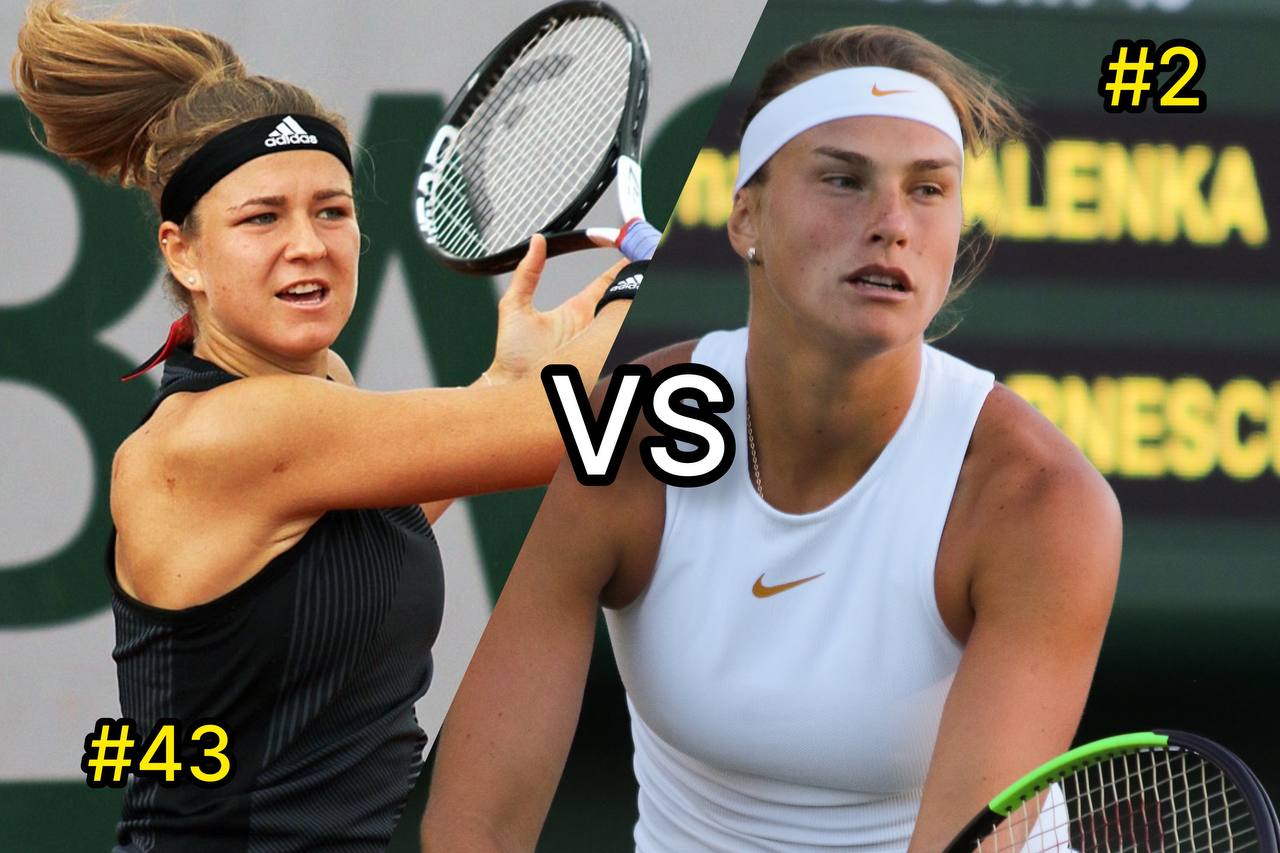
Similarly, as I was watching the Roland Garros 2023 I consistently found myself rooting for tennis players with lower rankings, rejoicing as Muchova (#43 at time of playing, #16 now) beat Sabalenka (#2) or Cerúndolo (#23) beat Fritz (#9).
And I wasn’t alone. Daniel Engber summarizes it brilliantly in an article on Slate:
In 1991, a pair of researchers at Bowling Green State University, Jimmy Frazier and Eldon Snyder [...] posed a simple hypothetical scenario to more than 100 college students: Two teams, A and B, were meeting in a best-of-seven playoff series for some unidentified sport, and Team A was “highly favored” to win. Which team would the students root for?
Eighty-one percent chose the underdog.
Then the students were asked to imagine that Team B had somehow managed to win the first three games of the series. Would the subjects root for the sweep or switch allegiance to the favorite? Half of those who first picked the underdog now said they’d support Team A. It was the same, cockamamie approach I’d taken to Butler and Michigan State: Root, root, root for the losing team—no matter what.
Which made me wonder…
Why do we root for the underdog?
1. Desire for Fairness
My personal take is that it’s related to our desire for fairness. In a world that favors the rich and privileged, underdogs winning creates the illusion that we’re in a meritocracy where anyone can succeed as based on talent and hard work. Most of us aren’t nepotism babies, so seeing underdogs win makes us feel like we have a shot at life too.

We might also derive additional satisfaction from knowing that an underdog’s win has more substantial impacts on their career than the winners – if you’re a struggling athlete, beating Roger Federer will boost your career, bring in new sponsorship deals and open doors like never before. If Federer flunks the match, what is losing a few million in prize money going to do to him? He’s certainly not going to starve!
2. Maximize Utility
The utilitarian perspective is about maximizing utility. In their paper “The Underdog Concept in Sports” (1991), Frazier and Snyder write “Because it is unexpected, an underdog’s victory is more satisfying than a favorite’s and an underdog’s loss is much less traumatic.”
They concede that for an unattached spectator, rooting for the favorite team is a poor emotional investment because top team’s success is expected, and their loss can lead to losing face. Rooting for the underdog has lower risks, higher payoffs if successful, and are less traumatic if they lose because let’s face it… they never had much of a chance anyway!
3. We Like Seeing Top Dogs Lose
Prof. Nadav Goldschmied from the University of California, San Diego suggests our support for underdogs is due to schadenfreude, defined as the pleasure we get from other’s misfortune. We support the underdogs not necessarily because we like them, but because we resent the successful teams for winning and want to see them taken down a notch. Especially if they’ve invested more money in winning.
The interesting thing is that while most people root for underdogs in low-stake environments like sports or music awards, once our choices have real consequences this support wavers. Joseph Stromberg writes on Vox about a study conducted by Scott Allison at the University of Richmond:
"Participants read a scenario in which two companies competed for a contract to test the water in Boise, Idaho. One was a new, struggling, small company, the other a well-established, decades-old one. When asked, slightly more than half of participants said they'd root for the small one to land the contract. But when the scenario was changed so that participants were told the companies would be testing water for potential cancer-causing chemicals in their own hometowns, the results were the opposite: more than twice as many rooted for the established, reliable company to win the bid."
As a consumer, this is interesting to me because I think of the times I say I support local bookstores and don’t want to make Jeff Bezos any richer, but when it comes time to vote with my wallet, I end up ordering all my books from Amazon because I can get the same products for 20% cheaper than at Barnes & Noble. It’s why people say the boycott fast fashion, but She In gets hundreds and thousands of orders each day. I do hope one day I’ll be able to purchase straight from the small businesses I support without batting an eye, but since I am still a broke college student, that day will be a while in the future.
 Vicky Giap
I really love your writings, especially your storytelling. The way you present your topic at the beginning makes me curious about what’s next, I am really impressed. I believe you have put in a lot of effort in mastering your storytelling to produce such thought – provoking blogs, which inspired me to do so!
Respect and admire you so so much! Wish you all the best <3. Please keep writing more. I am your loyal reader
With sincerity ❤
LikeLike